Crafting memorable characters isn't just about backstory or personality; it’s intrinsically tied to their Character Powers, Abilities & Gear. These aren't just flashy additions; they're the very tools and traits that define who a character is, what they can do, and how they navigate their world. Whether you're building a hero for a novel, a player character for a game, or a compelling figure for any narrative, understanding this trinity is crucial for creating depth, conflict, and genuine connection with your audience.
At a Glance: Building Dynamic Characters
- Powers & Abilities are not just combat stats: They include inherent talents, learned skills, and specialized knowledge.
- Inherent traits shape destiny: Natural gifts (like charisma or intellect) can lead to unique paths or personal struggles.
- Training builds mastery: Learned skills (from combat to crafting) show dedication and growth, forging a character's identity.
- Knowledge is power: What a character knows can be as impactful as what they do.
- Gear isn't just equipment: It's an extension of a character, reflecting their past, resources, and fighting style.
- Balance is key: Overpowered characters often lack compelling struggles; limitations drive narrative tension.
- Interaction creates depth: How powers, abilities, and gear interact—or conflict—reveals true character.
Beyond the Baseline: Defining Your Character's Core
Every character, from the most mundane to the most fantastical, possesses a unique blend of inherent and acquired traits. These aren't just about what they can do, but what they are capable of, and crucially, what challenges they might face or overcome. Think of these elements as the essential building blocks for their journey.
The Unseen Edge: Inherent Talents & Strengths
These are the gifts a character is born with or develops naturally, often without conscious effort. They might seem simple, but they form the bedrock of a character's potential and how they interact with the world. A character might be naturally quick-witted, possessing a keen mind that grasps complex ideas effortlessly, or they might exude an innate charm that opens doors. These aren't just positive traits; sometimes, an exceptional talent can be a burden, setting a character apart or attracting unwanted attention.
- Intellectual Prowess: Is your character a savant, a quick learner, or a cunning strategist? Perhaps they learn by osmosis, or possess a rare analytical mind that can dissect any problem. This could manifest as being incredibly smart, a critical thinker, or a gifted problem solver.
- Social & Interpersonal Charisma: Some characters naturally draw people in. They might be charming, confident, or a natural leader. Their ability to build relationships, communicate effectively, or even subtly manipulate situations (e.g., politicking, deflecting) can be a potent force.
- Physical Gifts: Some are simply built for action. They might be naturally athletic, strong, quick, or possess incredible dexterity and agility. This isn't just about brute force; it's about inherent physical capability.
- Specific Proficiencies: Sometimes, a character is a "natural" at something specific, whether it's wielding a sword, understanding complex magic, or even a mundane task like carpentry. They might be adroit with a particular tool or have a natural proficiency with magic.
- Creative & Perceptive Minds: Characters who see the world differently, like a linguistic wordsmith, a musical prodigy, or an imaginative artist, possess powerful inherent talents. Their empathy or inventive spirit can be a key driver for their actions and solutions.
- Memory & Practical Acuity: A photographic memory, an uncanny ability to recall names and dates, or a natural knack for working with hands are all valuable inherent traits. They provide a foundation for learning and skill acquisition.
These inherent talents often lead to the first sparks of a character's story, dictating initial opportunities or obstacles. Consider the raw potential of a young Luke Skywalker, inherently strong with the Force, or the natural strategic brilliance of a character like Lelouch Lamperouge.
The Forged Edge: Learned Skills & Abilities
While talents are often innate, skills are earned. They require dedication, training, and often, struggle. These are the practical competencies a character develops over time, shaping their expertise and defining their active role in the narrative. A character might begin with a natural talent for martial arts but only become a master through years of rigorous training. These skills often come with a narrative cost – time spent training, sacrifices made, or even the scars of past failures.
- Combat & Weaponry: From ancient sword fighting to modern firearms expertise, and specialized techniques like martial arts or even unique abilities like "mutant tail-whipping," these skills are about offense and defense.
- Building & Crafting: A character who can perform masonry, woodworking, metal work, or ship building brings invaluable utility, showcasing a practical, hands-on mastery.
- Supernatural & Magic: The ability to spell cast, perform necromancy, summon creatures, or control elemental forces requires intensive study and practice. Characters like Gandalf in Lord of the Rings exemplify this mastery.
- Strategy & Intellect: Beyond inherent intelligence, a character might train to be a tactician, strategist, or computer programmer, applying their mind to complex problems.
- Communication & Language: Mastering foreign languages, excelling at public speaking, or becoming a skilled linguist are crucial for diplomacy, espionage, or leadership.
- Vehicular & Technical: Operating heavy machinery, performing automotive mechanics, or demonstrating sailing prowess shows a specific, trained aptitude with complex systems.
- Survival & Exploration: Skills like hunting, tracking, dungeoneering, rock climbing, or parkour are vital for characters navigating dangerous environments.
- Healing & Care: Whether it's first aid, medicine, horsemanship, or even monster quelling, these skills are about protecting and restoring.
- Performance & Artistry: Dance, playing a musical instrument, or singing are skills that can entertain, inspire, or even be used for deception.
- Stealth & Deception: Lock picking, safe cracking, sleight of hand, or mastering quiet movement are skills critical for rogues, spies, and covert operatives.
The array of skills a character possesses directly impacts their narrative utility and how they can overcome obstacles. Think of Batman, a character defined not by superpowers, but by his mastery of an incredible range of learned skills, from martial arts to forensic science.
The Cognitive Arsenal: Knowledge Sets
Beyond what a character can do, there's what they know. Knowledge is often the most understated power, yet it can turn the tide of a battle, unravel a mystery, or save a kingdom. A character might be physically weak but possess critical knowledge of ancient arcana, history, or engineering that makes them indispensable.
- Arcane & Supernatural: Knowledge of magic, spellcraft, potions, mythology, or the nature of gods can grant immense power or insight.
- Science & Nature: Expertise in physics, biology, chemistry, geology, or astrophysics allows for understanding and manipulating the natural world or even the fabric of time.
- Humanities & Social: Knowledge of politics, diplomacy, history, psychology, or medicine is vital for understanding societies and individuals.
- Exploration & Travel: Knowing the intricacies of dungeoneering, navigation, or interstellar travel is crucial for adventurers.
- Engineering & Tech: A deep understanding of mechanics, industrial design, automotives, or starship engineering allows for creation, repair, and innovation.
- Business & Management: Skills in management, economics, investing, or accounting can be as impactful in certain narratives as combat prowess.
- Analytical & Creative: Expertise in research, investigation, art, or design can unlock solutions or reveal hidden truths.
A character's knowledge dictates their strategic value and problem-solving capacity. Imagine a character like Hermione Granger, whose vast knowledge of spells and lore repeatedly saves her friends where raw power might fail.
The Extension of Self: Character Gear & Equipment
Gear isn't just inventory; it's a character's physical manifestation of their powers, abilities, and even their values. A wizard's ancient wand, a warrior's ancestral sword, a superhero's custom suit, or a thief's specialized lockpicks—these items are integral to a character's identity and capabilities. Gear can enhance existing abilities, grant new ones, or even symbolize their journey and past.
The Right Tools for the Job
- Weapons: Swords, guns, bows, whips, magical staves – weapons are direct extensions of a character's combat skills. Their quality, enchantments, or unique properties (like Dracule Mihawk's Yoru, the "world's strongest black blade") significantly impact effectiveness.
- Armor & Defense: Shields, plate mail, energy fields, or advanced suits (like Iron Man's armor) protect characters but can also impose limitations (weight, power consumption).
- Utility Items: Tools for lock picking, crafting, healing kits, communication devices, or stealth gear (like grappling hooks or smoke bombs) directly support learned skills.
- Magical Artifacts & Relics: These are often unique items that grant specific powers (e.g., a "ring of invisibility," a "cursed amulet"), access to knowledge, or temporary boosts. They often come with a rich history and narrative significance.
- Vehicles & Mounts: Spaceships, unique cars, loyal steeds, or even trained monsters can be crucial gear, enabling travel, combat, or exploration.
- Specialized Attire: Beyond armor, a character's clothing can be gear. A spy's camouflaged suit, a wizard's enchanted robes, or a scientist's lab coat with hidden compartments all serve a function.
Gear can also symbolize a character's journey. A damaged piece of armor might tell a tale of a past battle, while an inherited weapon connects them to their lineage. The absence of specific gear can also define a character, forcing them to rely on ingenuity or inherent abilities.
The Symphony of Strength: Powers, Abilities, Gear in Action
The true magic happens when these elements interact, creating dynamic characters and compelling narratives. Consider the power dynamics explored in One Piece, where characters aren't just strong; they're strong in unique, interconnected ways.
The Haki Principle: Willpower as Power
In One Piece, Haki beautifully illustrates how inherent willpower and trained ability can often supersede physical powers. It's a prime example of a non-physical "ability" that scales with a character's growth and conviction.
- Observation Haki: Allows users to sense presences, emotions, and even foresee actions. Katakuri's "Future Sight" makes him incredibly hard to hit. This is an advanced perceptive ability, honed through training.
- Armament Haki: Creates an invisible armor, hardening parts of the body or weapons. Garp's "Fist of Love" demonstrates a master's application, reinforcing the idea that even basic physical attacks can be devastating with enough mastery.
- Conqueror’s Haki: The rarest form, allowing users to impose their will on others, knocking out weaker opponents or even impacting the environment. Shanks's supreme Conqueror's Haki can literally crack ships or disable others' Observation Haki, showing an innate power refined through immense willpower.
Haki demonstrates that strength isn't just what you're born with or what item you hold; it's also about inner resolve and the mastery of your spiritual self. This adds a layer of depth where a character's conviction becomes a palpable force.
Devil Fruits: Powers with a Price
The Devil Fruits in One Piece are perfect examples of powerful, unique abilities with inherent drawbacks. They grant incredible powers (like Luffy's reality-warping Hito Hito no Mi, Model: Nika or Blackbeard's gravity-controlling Yami Yami no Mi), but at the cost of the user's inability to swim. This "price" is crucial for balance and narrative tension.
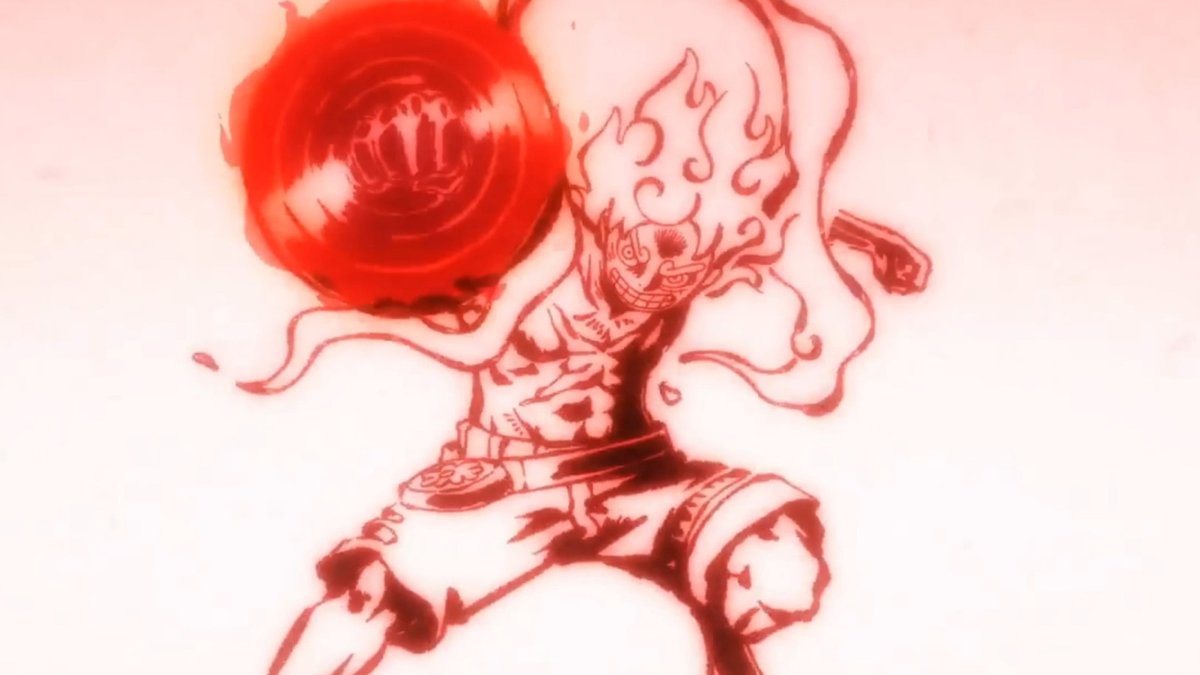
- Monkey D. Luffy: His Mythical Zoan Devil Fruit grants him rubber-like properties and later, the Gear 5 Transformation which literally turns imagination into physical power. Combined with his advanced Haki, Luffy is a master of absurd versatility and tactical genius, adapting his body to any scenario. His "gear" is his own body, transformed.
- Marshall D. Teach (Blackbeard): The only known user of two Devil Fruits, the Yami Yami no Mi (gravity/darkness) and the Gura Gura no Mi (earthquake generation). He can nullify other Devil Fruit powers and devastate landscapes. His strength lies in weaponizing chaos, but his powers also require strategic use.
- Kaido: The "Strongest Creature," with the Uo Uo no Mi, Model: Seiryu (Azure Dragon). His dragon form allows flight, elemental breath, and regeneration. Coupled with Advanced Ryou Haki for internal destruction, his durability is legendary. His power comes from a potent combination of Devil Fruit and honed Haki.
These examples illustrate how specific powers, combined with abilities (like Haki mastery or tactical genius), create distinct character profiles. They also show how limitations and weaknesses are as important as strengths for compelling storytelling.
The Masters of Skill and Gear
Characters like Dracule Mihawk and Shanks exemplify how supreme skill and powerful gear can challenge even Devil Fruit users. Mihawk, the "Strongest Swordsman," wields Yoru, a supreme black blade, and can cut glaciers with air slashes—a testament to his unparalleled swordsmanship and precision Haki. Shanks, a Yonko, relies on his devastating Conqueror's Haki and matching swordsmanship to halt wars, demonstrating that innate talent refined through training can bypass exotic powers.
For a deeper dive into how diverse characters, their powers, and their unique gear contribute to a vibrant universe, you might want to Explore Guardians of the Galaxy characters, where each member brings a distinct set of skills and tools to the team.
Designing Impactful Characters: A Practical Framework
Now that we've broken down the components, how do you intentionally design Character Powers, Abilities & Gear for maximum impact?
1. Start with the Story, Not Just the Power
Instead of thinking "What cool power can I give them?", ask: "What does this character need to do in the story?" or "What kind of challenges will they face?" A character destined to explore ancient ruins might need skills in dungeoneering and archaeology, or an inherent talent for problem solving. A character fighting for justice might need powerful combat skills and the charisma to inspire.
2. Embrace Limitations and Drawbacks
An "overpowered" character is often a boring one. What are the costs of their powers?
- Physical: Does using their power exhaust them, injure them, or drain their life force? (e.g., some magic users in fantasy).
- Mental/Emotional: Does their power come with a mental burden, a loss of control, or psychological scars? (e.g., characters with psychic abilities).
- Social: Does their power make them an outcast, feared, or a target?
- Situational: Does their power have specific environmental weaknesses (like Devil Fruit users and water)?
- Ethical: Does using their power force them to make difficult moral choices?
Luffy's inability to swim, Kaido's struggle with loneliness despite his strength, and Blackbeard's chaotic nature are all crucial limitations that define their stories.
3. Show, Don't Just Tell
Don't just list a character's abilities; show them in action. Have them fail, adapt, learn, and grow. A character who is a "brilliant strategist" needs to be shown making clever plans, not just having others comment on their intellect. A weapon described as legendary should prove its worth in a climactic moment.
4. The Interplay: How Elements Combine
How do a character's powers, abilities, and gear work together?
- Synergy: Does their gear enhance a specific ability (e.g., a sniper rifle for someone with excellent marksmanship)? Does a knowledge set inform the use of a power (e.g., a wizard's knowledge of ancient runes unlocking new spell possibilities)?
- Conflict: Does one power conflict with another? Does a piece of gear undermine an ability?
- Evolution: How do their abilities and gear evolve over time? Do they upgrade their weapons, learn new techniques, or discover hidden aspects of their powers?
This interplay creates complexity and realism.
5. Consider the Narrative Arc
A character's powers, abilities, and gear shouldn't be static. They can change, be lost, or be gained over the course of a story, reflecting the character's growth or regression. An underachieving character discovering an object that imbues them with an outrageous ability, as suggested in our research, is a classic arc starter. Similarly, a character chosen for a quest who doubts their ability but rises to the challenge through inherent strength is a powerful narrative. These changes drive the plot and deepen the character.
Common Misconceptions to Avoid
- "More powers equal better character": A single, well-defined power with clear limitations is often more compelling than a laundry list of abilities.
- "Gear is just flavor text": Every piece of significant gear should have a purpose, whether practical, symbolic, or both.
- "My character needs to be unique": While uniqueness is good, familiarity can also be effective. It's how the powers are used, and the character behind them, that truly matters.
- "Powers only mean fighting": Remember the vast range of intellectual, social, practical, and creative abilities. A character whose power is empathy or persuasive speech can be just as impactful as one who wields a sword.
Forging Your Character's Legacy
Understanding Character Powers, Abilities & Gear is more than just a creative exercise; it's a fundamental aspect of character development that shapes story, conflict, and theme. By carefully curating these elements, balancing inherent strengths with learned skills, and integrating meaningful gear, you imbue your characters with authenticity and depth.
Remember, every choice you make about a character's capabilities reveals something about their past, their present struggles, and their future potential. So, take the time to truly define these aspects, and you'll create characters who don't just act in your stories, but live and breathe within the imaginations of your audience. The most impactful characters aren't just powerful; they're thoughtfully constructed.