If you’ve ever found yourself chuckling at a talking raccoon or tearing up over a sentient tree, you’ve likely encountered the Guardians of the Galaxy Team Evolution & Rosters. This isn't just a saga of cosmic capers; it's a testament to how even the most mismatched individuals can form an unbreakable bond, adapting and changing to protect a universe that often doesn't realize it needs saving.
From their unlikely origins to their ever-shifting lineups, the Guardians represent the chaotic, heartwarming, and utterly unconventional side of heroism. They're not your typical polished super-team; they're intergalactic outlaws who bicker constantly, yet care deeply for one another, always finding a way to get the job done—even if it's "legal or otherwise."
At a Glance: What You'll Discover About the Guardians' Unique Journey
- Two Distinct Eras: Understand the fundamental difference between the original 1969 Guardians and the modern, popular iteration.
- The Foundational Five: Dive deep into the core members who kicked off the modern team.
- Dynamic Rosters: See how the team evolves, adding new faces and adapting to galactic threats.
- Beyond the Comics: Explore how the Marvel Cinematic Universe (MCU) shaped and expanded their story.
- The "Why": Grasp the unique blend of personalities and circumstances that make their evolution so compelling.
More Than Just a "Who's Who": Understanding the Guardians' Unique Charm
What makes a team of cosmic misfits, a group described by Marvel.com as having an "unconventional approach to the Super Hero business," so endearing? It’s not just their penchant for classic rock or their knack for causing collateral damage. It's the inherent humanity (or species-equivalent) in their struggle, their growth, and their constantly evolving identity. This isn't a static team; it's a living, breathing entity forged in the fires of personal trauma and shared adversity. Their evolution isn't just about who's on the roster; it's about how those individuals change each other, transforming from self-serving outlaws into a genuine family determined to protect the galaxy.
The narrative of their team evolution and changing rosters is a core part of their appeal. It allows for fresh perspectives, new powers, and dynamic character arcs that keep their stories engaging, whether you're reading a comic book or watching them on the big screen.
Before Star-Lord: A Brief Look at the Original Guardians (1969)
Before the modern team ever took flight, the name "Guardians of the Galaxy" belonged to a very different ensemble. Introduced in Marvel Super-Heroes #18 in 1969, this original team hailed from the 31st century of an alternate timeline (Earth-691). Their mission was to liberate Earth from the Badoon, an alien reptilian race.
This initial roster included:
- Major Vance Astro: An astronaut from 20th-century Earth, trapped in a protective suit due to his aging process.
- Martinex T'Naga: A crystalline being from Pluto.
- Captain Charlie-27: A genetically engineered soldier from Jupiter.
- Yondu Udonta: A blue-skinned archer from Centauri-IV (a very different iteration from the Ravager leader known in the MCU).
While these Guardians had their own epic adventures, they operated in a distant future, largely disconnected from the main Marvel continuity of their time. They laid the groundwork for the concept of cosmic protectors, but their roster and narrative are distinct from the team that truly captured popular imagination decades later. Think of them as the classic rock band that inspired the modern megastars—important, but not the version everyone knows by heart.
The Cosmic Cogs of the Modern Era: Guardians of the Galaxy 2.0 (2008 & MCU)
The version of the Guardians that most people recognize today, especially thanks to the Marvel Cinematic Universe, officially debuted in Guardians of the Galaxy (vol. 2) #1 in 2008. This team was born out of the ashes of cosmic devastation, specifically the Annihilation: Conquest storyline, which showcased a galaxy ravaged by the Phalanx.
This new iteration wasn't a pre-ordained government initiative or a long-standing organization. It was essentially an accident, a collection of survivors and misfits who realized that someone needed to stand guard. As the Fandom Wiki aptly puts it, they "banded together to protect the galactic from threats"—often threats they inadvertently caused or stumbled upon.
Their initial formation was spearheaded by Peter Quill, Star-Lord, who saw the need for a proactive defense force rather than just reactive heroes. He assembled a motley crew, each with their own baggage and reasons for being in the cosmic wilderness.
The Founding Five (Plus One): Initial Roster Breakdown
The core of the modern Guardians, the lineup that defined their initial appeal and served as the blueprint for their cinematic counterparts, was a dysfunctional family unit unlike any other.
- Star-Lord (Peter Quill): The Scrappy Leader
- Role: The charismatic (if often misguided) leader, tactician, and occasional comic relief.
- Why He Works: Peter's earthly upbringing gives him a unique perspective on cosmic events, often injecting pop culture references and a sense of relatability. His personal journey, from abducted child to space pirate to reluctant hero, grounds the team. He's the glue, however sticky or messy that glue might be.
- Rocket Raccoon: The Brains, Brawn, and Bluster
- Role: Master tactician, weapons expert, pilot, and engineer. The team's undeniable genius and moral compass (sometimes).
- Why He Works: Rocket's tragic backstory as a genetically engineered experiment fuels his cynicism and aggression, but also his fierce loyalty. He's often the one with the plan, or at least the one who can build the device to get them out of trouble. His friendship with Groot is the emotional core of the team.
- Groot: The Heart (and Limited Vocabulary)
- Role: Sentient tree-like alien, formidable muscle, and emotional support.
- Why He Works: Groot's unwavering loyalty and seemingly simple nature belie a deep intelligence and immense power. His limited vocabulary ("I am Groot") becomes a language of profound emotion, understood implicitly by his closest friends. He's the gentle giant, capable of both immense destruction and acts of profound self-sacrifice.
- Gamora: The Deadliest Woman in the Galaxy
- Role: Master assassin, highly skilled combatant, and the team's pragmatic voice.
- Why She Works: Thanos's adopted daughter, Gamora's quest for redemption and escape from her past makes her a formidable, often stoic, presence. Her moral compass is complex, shaped by years of violence, but her commitment to justice (or at least, doing the right thing for once) is unwavering. Her combat skills are unparalleled.
- Drax the Destroyer: The Literal-Minded Enforcer
- Role: Brute strength, uncompromising warrior, and unexpected source of philosophical musings (or misinterpretations).
- Why He Works: Driven by a singular desire for vengeance against Thanos (though his target shifts over time), Drax brings immense physical power and a unique, literal interpretation of the universe. His bluntness often provides comedic relief, but his loyalty to his friends is absolute.
Expanding the Family: Key Additions & Shifting Dynamics
The Guardians' strength has always been their adaptability. As the galaxy throws new threats their way, their roster often shifts, bringing in new members who offer different skill sets, perspectives, and, inevitably, more chaotic dynamics.
- Mantis: The Empathic Powerhouse
- Comic Introduction: Mantis was actually an early member of the original Avengers in the 1970s before becoming a significant cosmic character and joining later iterations of the Guardians in the comics.
- MCU Introduction: Introduced in Guardians of the Galaxy Vol. 2, she serves as Ego's empathic servant before joining the team. Her ability to sense and manipulate emotions adds a unique, often vulnerable, dimension to the team. She provides an emotional anchor, often calling out the team's insecurities or soothing their frayed nerves. Her gentle nature contrasts beautifully with the team's more aggressive members.
- Nebula: From Antagonist to Ally
- Evolution: Gamora's adopted sister, Nebula began as a bitter rival and antagonist. Her journey of healing from Thanos's abuse and finding her own identity is one of the most compelling aspects of the Guardians' story.
- Role: Her cybernetic enhancements make her a formidable fighter, and her strategic mind offers a ruthless efficiency the team sometimes lacks. Her slow, hard-won integration into the team symbolizes forgiveness and the possibility of change.
- Cosmo the Spacedog: The Telepathic Pup
- Comic Origins: In the comics, Cosmo is the head of security for Knowhere, a highly intelligent, telepathic, telekinetic Soviet space dog.
- MCU Presence: Featured in the background in the first film, his role grew significantly in Guardians of the Galaxy Vol. 3, where he's a fully integrated, beloved member, bringing a unique blend of adorable charm and powerful psychic abilities. He's a reminder that even the most unexpected beings can be guardians. The Fandom Wiki lists him as a current member, highlighting his importance.
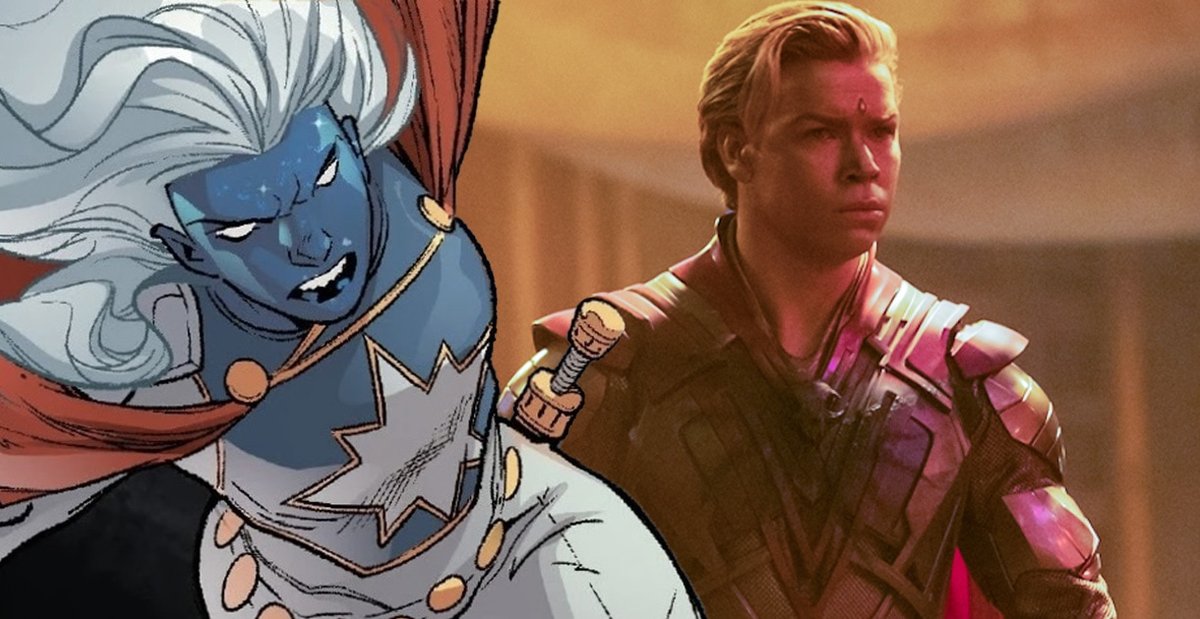
Beyond these prominent additions, the comic book rosters have seen a vast array of temporary or rotating members, including: - Adam Warlock: A powerful cosmic being, often an ally, sometimes a foe, and occasionally a Guardian.
- Venom (Flash Thompson): The symbiote-wearing hero joined for a period, adding a very different kind of anti-hero to the mix.
- Kitty Pryde (Star-Lord): Yes, for a time, Kitty Pryde of the X-Men took on the mantle of Star-Lord and led the team.
- The Thing (Ben Grimm): Even the beloved Fantastic Four member spent time as a Guardian.
These variations underscore a key truth about the Guardians: their essence isn't tied to a specific individual but to a spirit of unconventional heroism and found family. You can see how these shifts provide a dynamic canvas for storytelling, keeping all Guardians of the Galaxy characters fresh and relevant.
The Ebb and Flow of Guardianship: Why Rosters Change
Why don't the Guardians just stick to one winning formula? The reasons for their ever-evolving lineup are as varied as the cosmos itself:
- Character Arcs and Personal Quests: Characters, much like people, grow. Gamora's personal journey, for instance, often takes her away from the team as she confronts her past or seeks a new future. Star-Lord might step down from leadership, or Rocket might embark on a solo mission. These personal evolutions naturally lead to changes in the team's structure.
- Major Galactic Threats Requiring New Skillsets: Sometimes, a particular cosmic crisis demands a specific set of powers or expertise that the current roster lacks. Bringing in a character like Adam Warlock or even a more temporary ally can be crucial for survival.
- Creative Team Decisions (Comics): In the realm of comic books, new writers and artists often bring fresh visions for the team. This can lead to drastic roster changes, new uniforms, or even entirely new mission statements to revitalize the title.
- Narrative Needs (MCU): The movies, while inspired by the comics, have their own distinct narrative arcs. Characters like Nebula and Mantis were slowly integrated over multiple films, reflecting a deliberate storytelling choice to show their growth and eventual acceptance into the family. The conclusion of Guardians of the Galaxy Vol. 3 demonstrated a clear passing of the torch and a new beginning for several characters.
This fluidity is a strength, not a weakness. It ensures that the Guardians' stories remain fresh, allowing for different narrative focuses and the exploration of new character dynamics. It's a key part of what makes Guardians of the Galaxy characters so compelling to follow.
MCU vs. Comics: Different Paths, Shared Spirit
While the MCU has undeniably catapulted the Guardians into global superstardom, it's important to recognize that the films are an adaptation, not a direct translation, of the comic book history.
- Formation and Origin: The comics saw Star-Lord actively recruiting, often out of necessity after galactic wars. The MCU version coalesced more organically, almost by accident, in a prison.
- Roster Composition and Introduction: While the core five are consistent, the timing and context of other members joining differ. Mantis, for example, has a very different introduction in the comics compared to her MCU debut. Nebula's journey from antagonist to Guardian is explored in greater depth and over a longer period in the films than in many comic runs.
- Focus: The MCU films tend to put a stronger emphasis on the "found family" aspect and the personal drama between team members, often at the expense of deeper cosmic lore that's prevalent in the comics.
Despite these differences, the films successfully distill the essence of the Guardians: a dysfunctional family of misfits, united by shared trauma and a surprisingly strong moral compass, who stumble through the galaxy doing good. They still "bicker constantly" but "care deeply about one another," just as the original Marvel.com description stated. The spirit remains the same, even if the specific details of their team evolution vary.
Unraveling the Guardians' "Secret Sauce": Team Dynamics in Action
Beyond individual powers, the real magic of the Guardians lies in their collective chemistry. This isn't just a group of individuals; it's an ecosystem of clashing personalities that somehow works.
- Banter as Bonding: Their constant bickering isn't just for laughs; it's a form of communication, a way to express affection, frustration, and loyalty. It's how they process trauma, challenge each other, and ultimately grow closer.
- The Found Family Trope: Many of the Guardians are orphans, outcasts, or creations searching for purpose. They find it in each other, forming bonds stronger than blood. This theme resonates deeply with audiences, as it speaks to the universal human need for belonging.
- Strength in Diversity: Their differences in species, origin, power sets, and personality are their greatest asset. Rocket's tactical genius complements Drax's brute force; Gamora's precision contrasts with Quill's improvisational style; Mantis's empathy balances Nebula's pragmatism. Each member fills a crucial role, making the whole greater than the sum of its parts. This diversity is what allows all Guardians of the Galaxy characters to shine.
- Adaptability: Whether it’s facing down a celestial being, escaping a space prison, or simply navigating awkward social situations, the Guardians learn to adapt. Their team structure itself is a testament to this, constantly evolving to meet new challenges.
Beyond the Main Stage: Spin-offs and Alternative Rosters
The popularity of the Guardians has naturally led to various spin-offs and alternative versions across different media. In the comics, different creative teams have explored alternate timelines or new iterations of the team, sometimes with wildly different rosters. Animated series like Guardians of the Galaxy (2015) offered their own takes on the core team, often introducing characters in new ways or focusing on specific comic storylines.
These variations, while not always canonical to the main comic or MCU continuity, further highlight the enduring appeal of the concept. They demonstrate that the idea of a ragtag group of misfits finding heroism in the cosmos is a resonant one, capable of sustaining many interpretations and a wide range of Guardians of the Galaxy characters.
Common Questions About the Guardians' Lineup
Let's address some frequently asked questions about the Guardians' ever-changing cast.
Q: Who was the first Guardian of the Galaxy?
A: This depends on whether you mean chronologically in publishing history or in the modern narrative. The original team debuted in 1969 with members like Vance Astro and the original Yondu. However, the modern team, the one Star-Lord leads, started in 2008. Most popular culture references the 2008 team.
Q: Do Gamora and Nebula always stay with the team?
A: Not always. Both characters have strong individual arcs that sometimes lead them away from the core group in both comics and the MCU. Their journeys often involve confronting their pasts or pursuing personal quests, but they frequently return, reflecting their deep ties to the team. Their relationships are central to all Guardians of the Galaxy characters as a collective.
Q: Is Cosmo the Spacedog a full Guardian?
A: Yes! Especially after Guardians of the Galaxy Vol. 3, Cosmo is firmly established as an integral and beloved member of the team. In the comics, he's a vital ally and often provides support, sometimes even leading a version of the team.
Q: Have the Guardians ever had members from Earth?
A: Beyond Peter Quill, who has Terran heritage, the comic books have featured several Earth-born heroes joining the Guardians, including Kitty Pryde (who served as Star-Lord for a time), the Thing (Ben Grimm) from the Fantastic Four, and even Venom (Flash Thompson).
Q: What makes a Guardian a Guardian?
A: It's not about being flawless or even particularly heroic at the outset. It's about a willingness to do good, a commitment to protecting the innocent, and most importantly, a deep, if often unexpressed, loyalty to the dysfunctional family they've found in each other.
The Enduring Legacy of the Galaxy's Guardians: What Lies Ahead
The story of the Guardians of the Galaxy is far from over. Their dynamic team evolution and constantly changing rosters are not just plot devices; they are a core part of what makes them compelling. As the universe expands and new threats emerge, you can expect new faces to join the ranks, new leaders to rise, and new challenges to shape the very definition of a Guardian.
They've shown us that heroism doesn't always wear a cape or follow a strict code of conduct. Sometimes, it wears a pilot's jacket, carries a blaster, speaks in limited vocabulary, or just loves classic rock. What remains constant is their commitment to each other and their chaotic, yet heartfelt, mission to keep the galaxy safe. As new Guardians of the Galaxy characters emerge, their legacy of humor, heart, and heroism will undoubtedly continue.