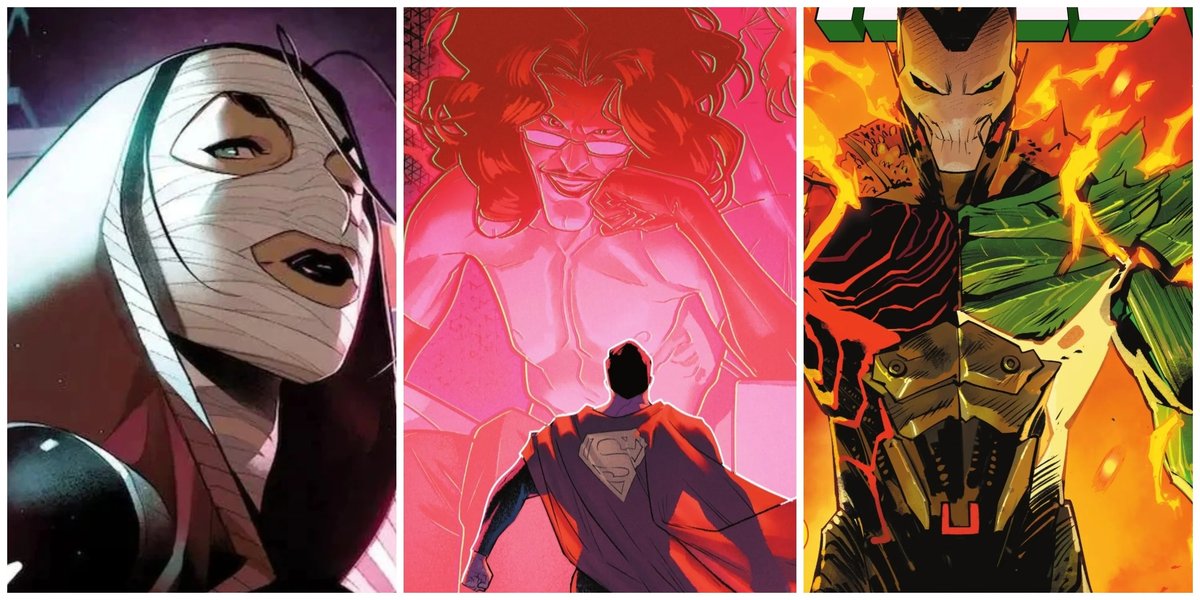
The cosmos is a vast, bewildering place, teeming with untold wonders, ancient civilizations, and, inevitably, a rogue's gallery of truly terrifying foes. For the galaxy's most unlikely heroes, the Guardians of the Galaxy, dodging planet-devouring entities, power-mad despots, and even their own family members is just another Tuesday. Diving into the world of the Villains & Antagonists of the Guardians reveals a universe of epic struggles, profound moral dilemmas, and the very real threats that push Star-Lord, Gamora, Drax, Rocket, and Groot to their absolute limits.
This isn't just about punching bad guys; it's about understanding the intricate web of motivations, cosmic stakes, and personal demons that define the Guardians' most dangerous encounters.
At a Glance: The Foes that Forge Heroes
- Cosmic Calamities: Threats that imperil entire galaxies, often driven by insatiable hunger or a distorted sense of order. Think entities that literally consume worlds.
- Power-Hungry Conquerors: Individuals or empires seeking dominance, using armies, advanced technology, or sheer willpower to achieve their goals.
- Twisted Minds & Manipulators: Those who prefer psychological warfare, playing puppet master with worlds and individuals, often from the shadows.
- Internal Betrayals & Corrupted Allies: Sometimes the most dangerous threats emerge from within, or from those once thought to be on the side of good.
- Personal Demons & Family Feuds: The Guardians themselves often bring their own baggage, leading to confrontations with parents, siblings, or past selves that hit hardest.
- The Guardians' Role: These villains aren't just obstacles; they're catalysts, shaping the team's unity, revealing their vulnerabilities, and forcing them to grow.
The Architect of Despair: Thanos and the Quest for Absolute Power
When you talk about the greatest Guardians of the Galaxy villains, one name inevitably overshadows all others: Thanos. The Mad Titan isn't just a force of nature; he's a philosophical conundrum wrapped in a genocidal package, driven by a twisted belief in "balance" through mass culling. His ambition to harness the power of all six Infinity Stones wasn't merely for conquest, but to reshape the universe according to his will—an endeavor that left trails of devastation and despair across countless worlds, as the experts at Ranker Comics aptly describe.
Thanos's encounters with the Guardians are deeply personal. Gamora and Nebula, his "daughters," bear the brunt of his cruel tutelage and manipulation. Their efforts to escape his shadow, to forge their own paths, form some of the most emotionally resonant storylines in the Guardians' saga. For Star-Lord and the rest of the team, facing Thanos meant confronting a being of unimaginable power and resolve, pushing their teamwork and individual courage to breaking points. His very presence forces the Guardians to mature, to understand that not all threats can be overcome with a witty retort or a perfectly timed explosion. It demands sacrifice, strategy, and sometimes, heartbreaking choices.
World-Eaters and Ancient Horrors: Galactus and the Cosmic Balance
Beyond the Mad Titan, the Guardians have brushed against primordial forces that redefine the scale of universal peril. Galactus, an ancient entity with an insatiable craving for devouring planets, stands as a stark reminder of the cosmic indifference to mortal struggles. His arrival signals doom for entire civilizations, a natural disaster with a face and immense power.
While not always directly "antagonistic" in a personal grudge match, Galactus's existence forces heroes like the Guardians to act, often as desperate defenders against an inevitable force. Encounters with Galactus—or his heralds—test not just the Guardians' strength, but their resourcefulness and diplomatic skills, as they try to evacuate populations or find alternative energy sources to appease the cosmic hunger. It's a different kind of danger: less about malice, more about survival against an existential threat.
The Shadow Within: Adam Warlock, Magus, and Corrupted Potential
Not all antagonists wear their evil on their sleeve. Sometimes, the greatest threats emerge from unexpected places, even from potential allies. Adam Warlock is a prime example. Initially seen as a powerful cosmic being who could aid the Guardians, his journey took a darker turn. As Ranker Comics points out, his metamorphosis into Magus unveils a dark, formidable side, transforming him into an emerging cosmic threat from within himself.
Magus represents the ultimate corruption of power and purpose. His existence challenges the Guardians to confront not just an external foe, but the very idea of destiny and free will. How do you fight someone who is an alternate, evil version of a benevolent being? This type of antagonist introduces psychological complexity, forcing the Guardians to grapple with questions of identity, the potential for darkness in anyone, and the high stakes of cosmic influence.
The Sovereign: Perfection's Imperfect Pursuit
Not every threat has cosmic ambition. Some are simply obsessed with their own perceived perfection and easily provoked vanity. The Sovereign, a genetically engineered race of gold-skinned beings, exemplify this. Their antagonist role began not with a grand scheme, but with a petty theft orchestrated by Rocket—stealing their precious Anulax Batteries.
What followed was a relentless, almost comically obsessive pursuit. The Sovereign's drones, led by their High Priestess Ayesha, are a constant nuisance, showcasing the Guardians' ability to irritate and outmaneuver foes through sheer audacity. While individually not as powerful as Thanos or Galactus, their vast numbers, advanced technology, and unwavering dedication to "retributive justice" make them a persistent and dangerous force, highlighting how small actions can have big, golden consequences in the galaxy.
The Tyrant's Grip: Ronan the Accuser and the Kree-Nova Conflict
Before Thanos's universe-altering snap, the Guardians faced more conventional, yet equally deadly, threats. Ronan the Accuser, a fanatical Kree extremist, stands as a prime example. Driven by a vengeful hatred for the Nova Corps and a radical interpretation of Kree justice, Ronan wielded the Power Stone with devastating effect. His goal: to destroy Xandar, the Nova Empire's homeworld, and assert Kree dominance.
Ronan's encounter with the Guardians showcased their unlikely formation and their initial struggle to work as a cohesive unit. His brutality, unwavering conviction, and immense power (amplified by the Power Stone) forced the nascent team to put aside their differences and truly become "Guardians." This battle was pivotal in solidifying their bond and establishing their reputation as defenders of the innocent, even if accidentally. It also highlighted the deep-seated conflicts between galactic empires, a common backdrop for the Guardians' adventures.
Twisted Heritage: Ego, the Living Planet, and the Perils of Lineage
Perhaps the most personal and devastating antagonist for Peter Quill (Star-Lord) was his own father, Ego, the Living Planet. Disguised as a benevolent celestial, Ego's true nature as a parasitic entity with a planet-sized ego and a universe-spanning plan of self-replication was a horrific revelation. His "love" for Peter was merely a means to an end, a tool to expand his consciousness across all worlds.
This storyline delves deep into themes of family, destiny, and the seductive nature of power. Ego's ability to manipulate matter and energy, coupled with his charismatic deception, made him an incredibly formidable and emotionally resonant foe. The battle against Ego was not just a physical struggle but a psychological one for Quill, forcing him to choose between his newfound family and a destiny he never wanted. It was a confrontation that challenged the very definition of heroism and tested the strength of the Guardians' bonds.
The Collectors and The Grandmasters: Amoral Opportunists
Not every antagonist is driven by conquest or malice; some are simply collectors. The Collector (Taneleer Tivan) and his brother, the Grandmaster (En Dwi Gast), represent the amoral, often chaotic, side of cosmic power. They are ancient beings, Elders of the Universe, who indulge their peculiar obsessions with little regard for the suffering they cause.
The Collector, with his vast museum of living and inanimate treasures, views sentient beings as mere curiosities to be acquired. His initial interest in the Orb (containing the Power Stone) drew the Guardians into his orbit, revealing the darker side of cosmic capitalism. The Grandmaster, ruler of the trash planet Sakaar, thrives on gladiatorial combat and manipulative games, forcing Rocket, Groot, and ultimately Thor into his barbaric arena. These encounters highlight the widespread exploitation and casual cruelty that exist in the far reaches of space, often hidden beneath a veneer of eccentric charm. They force the Guardians to adapt to environments where conventional heroics might not work, requiring cunning and improvisation.
The Ravagers: A Band of (Sometimes) Antagonists
The Ravagers, a loose confederation of space pirates and mercenaries, led for a time by Yondu Udonta, often find themselves on both sides of the Guardians' adventures. While Yondu ultimately becomes a crucial ally and father figure to Peter Quill, the Ravagers frequently start as antagonists, clashing with the Guardians over bounties, stolen goods, or conflicting agendas.
Their dynamic is complex: they are outlaws, but with their own code. Encounters with various Ravager factions showcase the grey areas of galactic morality. They're not "evil" in the grand Thanos-ian sense, but their self-serving nature and willingness to resort to violence often put them at odds with the Guardians' more idealistic (or at least less overtly self-serving) goals. These interactions often lead to hilarious skirmishes, unexpected alliances, and a deeper understanding of the rough-and-tumble side of space.
The Brood: Xenomorphic Terrors
For those who dive deeper into the comic book lore, the Brood represents a truly terrifying, purely predatory threat. These parasitic, insectoid aliens are often compared to the Xenomorphs from the Alien franchise. They seek to reproduce by implanting their eggs into other sentient beings, slowly transforming them into Brood hosts.
The Brood are a visceral, horror-driven threat that tests the Guardians' resilience against overwhelming biological warfare. They don't have grand motivations or complex backstories; they are simply a force of nature driven by instinct, making them exceptionally difficult to reason with or defeat permanently. Facing the Brood often pushes the Guardians to their most desperate, highlighting their dedication to protecting life, even in its most grotesque forms.
Why These Villains Matter: Shaping the Guardians' Legacy
The extensive cast of villains encountered by the Guardians of the Galaxy does more than just provide thrilling action; they are indispensable in crafting grand sagas that capture imaginations. As Ranker Comics points out, these antagonists boast an array of distinct powers, compelling backstories, and complex motivations that deepen and enhance the Marvel Universe.
Each formidable adversary pushes our heroes to their limits, playing a crucial role in shaping the gripping storylines fans adore. From universe-ending threats to personal betrayals, these encounters are where the Guardians learn, grow, and truly earn their name. They learn the value of family, both biological and chosen, and understand that sometimes, the greatest battles are fought not with blasters, but with empathy and sacrifice. You can Explore Guardians of the Galaxy characters to see how each hero’s unique background and powers contribute to overcoming these incredible challenges.
Navigating the Cosmic Gauntlet: Lessons from the Guardians' Foes
Understanding the Guardians' antagonists offers more than just entertainment; it provides a framework for appreciating the team's resilience and evolution. Here’s what their most dangerous encounters teach us:
- The Power of Unity: Against threats like Thanos or Ronan, individual strength is never enough. The Guardians consistently prove that their collective, often chaotic, synergy is their greatest weapon.
- Embrace the Unconventional: When facing a planet-sized father or a zealous accuser, standard hero tactics often fail. The Guardians' strength lies in their ability to improvise, to use humor as a shield, and to sometimes dance their way out of trouble.
- Family Isn't Always Blood: Many of the Guardians' deepest conflicts stem from biological family (Ego, Thanos's daughters). Yet, their chosen family proves to be their salvation, demonstrating that bonds forged through shared experience and loyalty are the most powerful.
- Redemption is Possible (But Hard-Won): Characters like Nebula (and even Yondu) start as antagonists but, through difficult choices and personal growth, find paths to redemption. Their journeys against former allies highlight the messy, hopeful process of change.
- The Stakes Are Always Personal: While the threats might be cosmic, the impact is always deeply personal to one or all of the Guardians. This grounded emotional core makes the struggles against universe-threatening villains profoundly relatable.
Common Questions About Guardians' Antagonists
Q: Who is the strongest villain the Guardians have faced?
A: Without a doubt, Thanos, especially when wielding the Infinity Stones, represents the apex of raw power and destructive capability that the Guardians have directly confronted and been personally affected by. Galactus is also a contender for sheer cosmic power, though his role is more as a force of nature.
Q: Are all Guardians villains purely evil?
A: Not all. While some, like Thanos and Ronan, are driven by extremist ideologies or a lust for power, others operate in moral grey areas. The Ravagers often serve their own interests rather than being inherently "evil." Even characters like Adam Warlock, in his Magus form, represent a tragic corruption rather than pure malevolence. Ego, while monstrous, believed he was simply fulfilling his purpose.
Q: Why do some Guardians villains become allies later?
A: This often happens due to a shift in perspective, shared enemies, or the Guardians' influence. Nebula's journey from vengeful sister to steadfast ally is a prime example of overcoming past trauma and finding a new purpose. Yondu's transformation from gruff leader of the Ravagers to a sacrificial father figure for Quill is another powerful instance.
Q: How do the comic book villains differ from the movie villains?
A: While the core identities of major villains like Thanos, Ronan, and Adam Warlock remain, the specific storylines, character development, and powers can vary. The movies often streamline complex comic book arcs, making them more accessible while retaining the essence of the characters' threat and motivations. For instance, the comic book lore of characters like the Brood goes much deeper into body horror than the cinematic universe has explored.
Beyond the Fray: The Ever-Evolving Threats
The universe of the Guardians of the Galaxy is constantly expanding, bringing new dangers and challenging the team in unforeseen ways. From the cosmic horrors of ancient entities to the deeply personal betrayals of family, these antagonists are more than just plot devices. They are the crucible in which heroes are forged, their battles echoing through the stars, forever shaping the legacy of a ragtag group of misfits who dared to call themselves the Guardians.
Their journey is far from over, and with each new threat, the Guardians remind us that even in the face of insurmountable odds, hope, humor, and a little bit of dance can make all the difference. Keep your eyes on the stars; you never know what (or who) is lurking just beyond the next nebula.